Two apps, one backend: a booking front end and the ops system that runs the fleet.
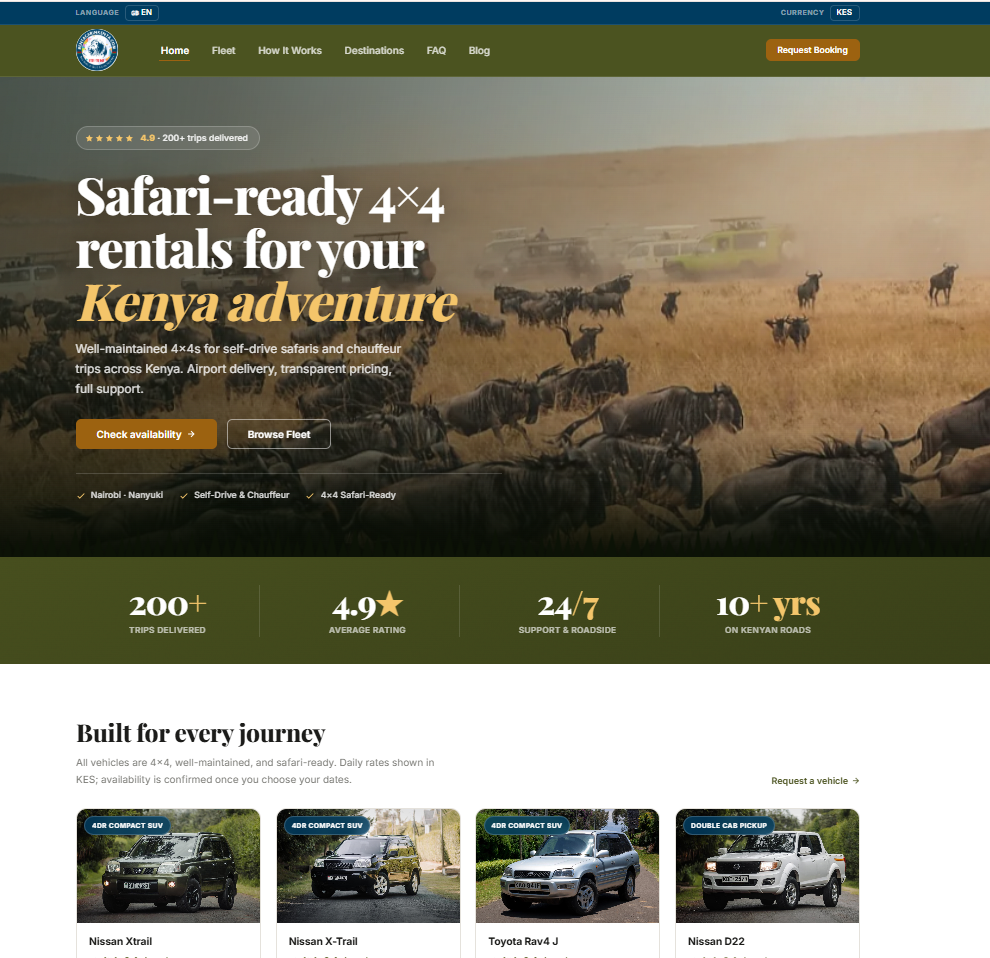
A Nairobi safari 4x4 hire business needed to take bookings and payments from international tourists and run the whole operation behind them. Autoflow built the multilingual booking site and the back-office platform on one shared backend.
The challenge
Rent A Car in Kenya rents self-drive and chauffeur-driven 4x4s for safaris out of Nairobi and Nanyuki, mostly to international tourists planning a trip from abroad.
They needed two things at once: a customer-facing site that could take booking requests and payments in the way overseas visitors and local customers actually pay, and an internal system to run the whole operation behind it, from quote to booking to payment to invoice to vehicle maintenance.
Autoflow’s role
Autoflow Solutions built this end to end: architecture, the full-stack build across both apps, the payments integration, and the security hardening.
Constraints
- Customers pay from two worlds: international cards from abroad and M-Pesa locally. Payments had to cover both.
- Prices are money. The system had to be safe against a customer tampering with a total in the browser.
- Inbound tourists arrive in several languages, so the booking site is built in five: English, French, German, Spanish, and Italian.
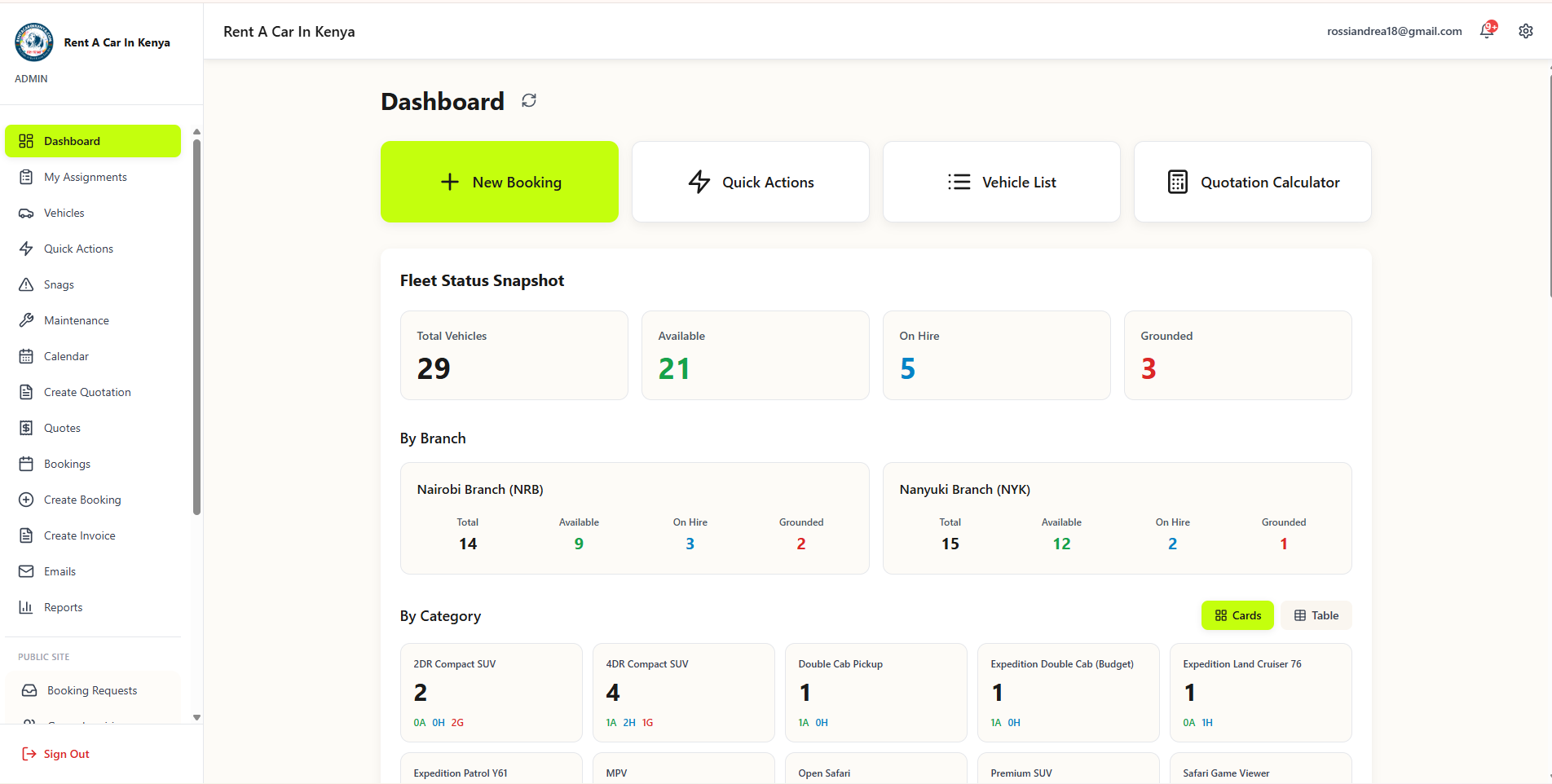
- A small team runs the fleet day to day, so the back office had to cover the full lifecycle rather than just bookings.
How we built it
- 01
Take payment the way Kenya actually pays
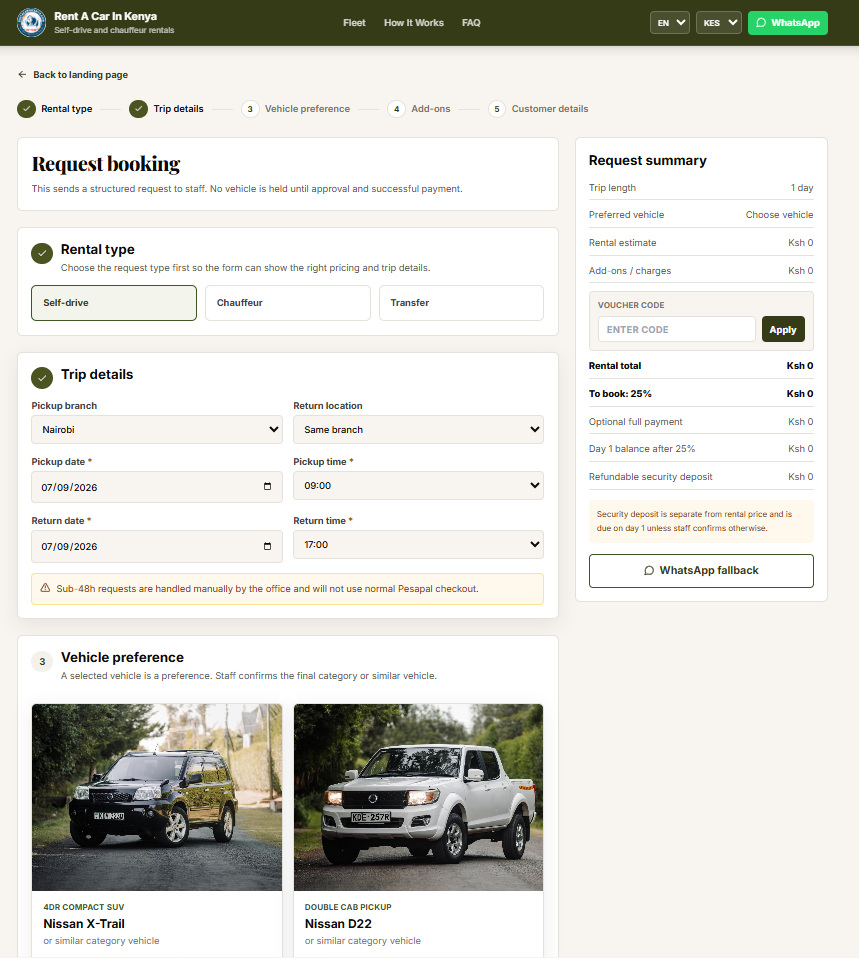
Bookings run on Pesapal, covering both local M-Pesa and international cards. Payment is confirmed server-to-server through a webhook, so a booking only flips to paid when the money has truly landed, and an invoice drafts itself the moment it is paid in full.
- 02
Never trust a price from the browser
Every quote and booking total is recomputed on the server before payment, so a customer cannot edit a total client-side and pay less than the real price. This was a deliberate security decision, enforced through the whole payment flow.
- 03
Build the back office that keeps a fleet on the road
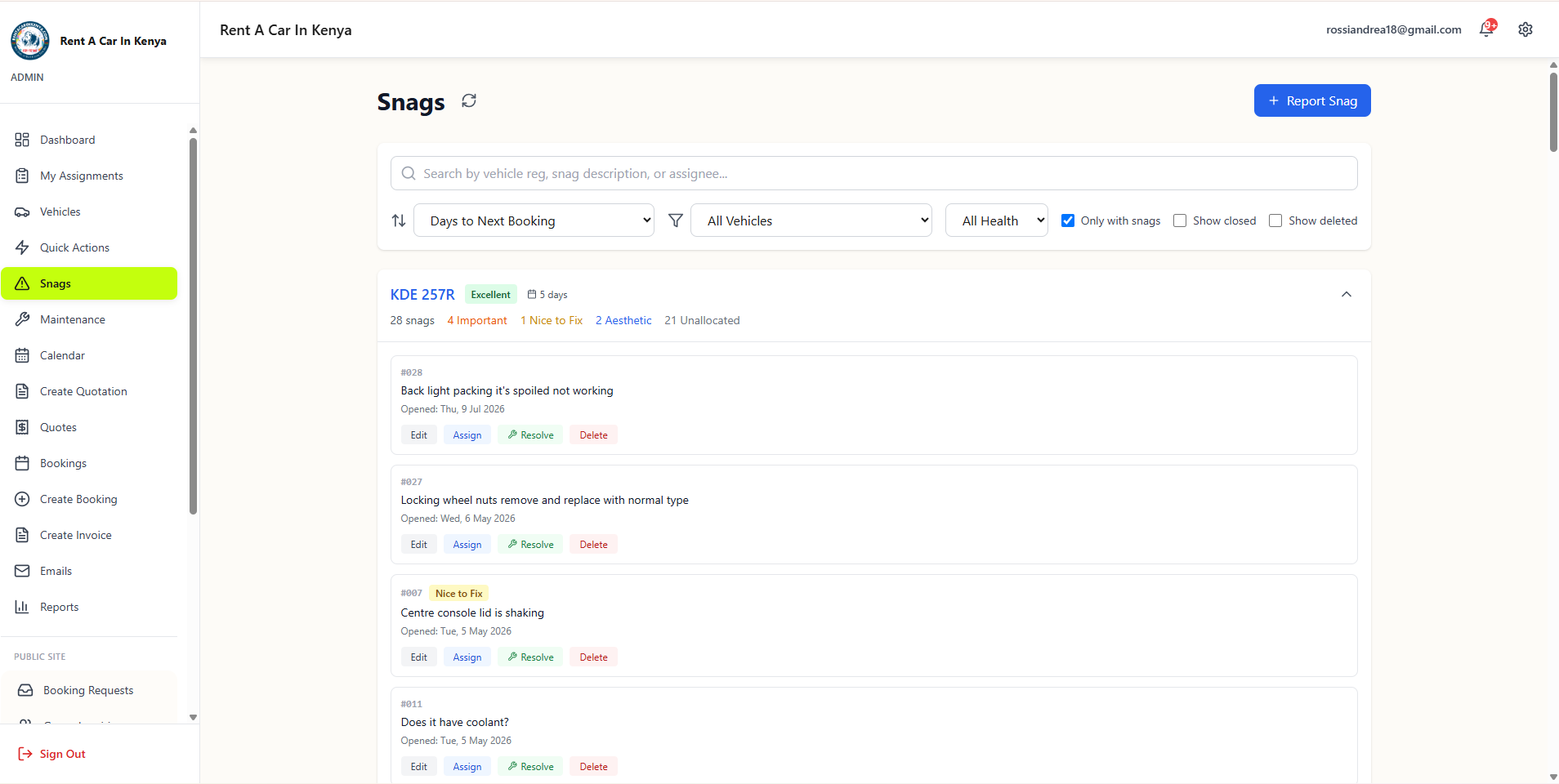
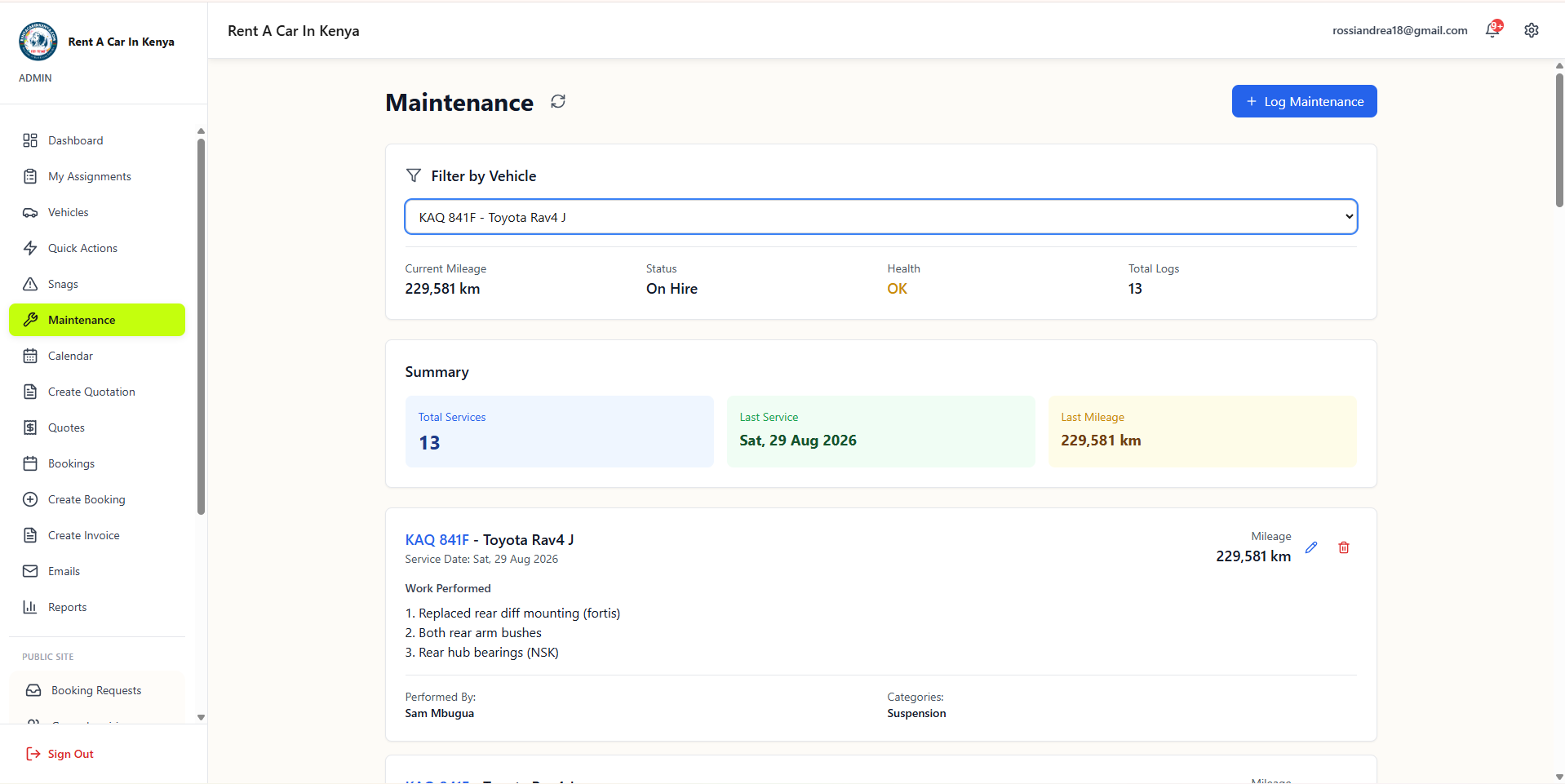
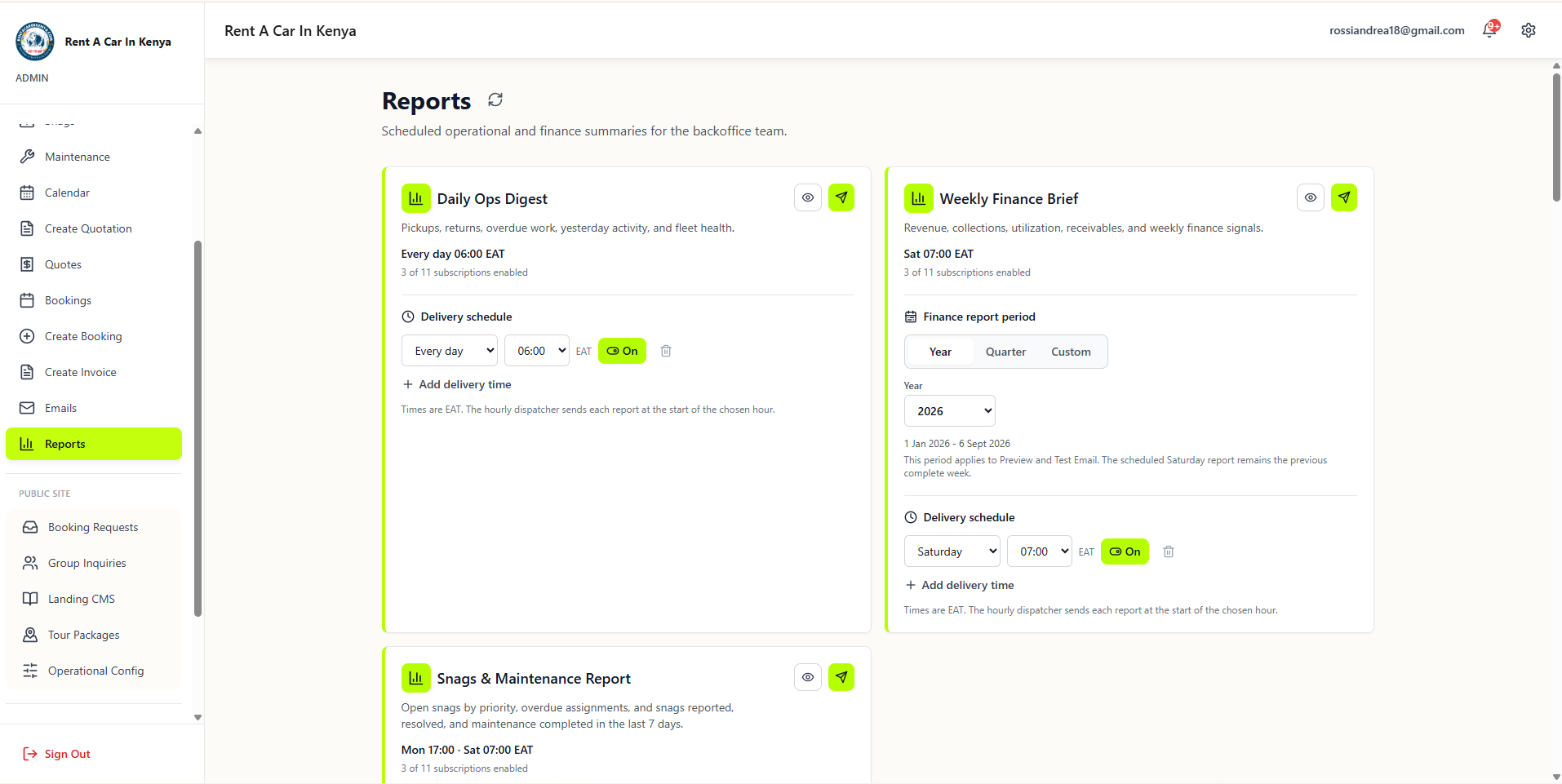
Not just bookings, but the full lifecycle: quotes, VAT invoicing, per-vehicle records, maintenance and defect (snag) tracking, plus an automated daily operations digest and weekly finance brief so the owner sees the numbers without pulling them.
What we delivered
- Five-language customer booking site: booking requests, status lookup, my-bookings, payment return, tour packages, group inquiries, and a blog.
- Back-office operations app: bookings, fleet and vehicle records, a quotation calculator, VAT invoicing, pricing admin, maintenance, defect (snag) tracking, and reporting.
- Pesapal payments (M-Pesa and card) with server-to-server confirmation and an invoice drafted automatically once a booking is paid in full.
- Automated daily operations and weekly finance emails, plus calendar and review syncing and web-push notifications.
- Role-based access with server-side user provisioning.
Evidence
Want a system your business actually owns?
Tell us what breaks or slows you down. If a build makes sense, we will tell you. If it does not, we will tell you that too.